Monday, May 31, 2010

The Flesh

I remember back when I was in graduate school and part of a Navigator training center that we would go through these quirky fads. One was our greeting. During a spring conference our most hard-core staff man (Rambo for Jesus-type), Nick, challenged us to hold each other accountable for our ministries.

So, for about a year or two, our greetings went like this, “Hey bro . . . where’s your ministry?” The answer would come back something like, “Freshmen guys in Hagan Residence Hall and God is really blessing it.” We could always brag as much as we wanted as long as we threw in “God is really blessing it.” Speaking of which, the way that we said goodbye was simply, “Blessing!” No one knew what the hell that meant but

it sounded cool . . . no . . . more like spiritual.

Anyway, I went to the coffee shop this morning and read about 6 chapters in my new book, The Way of All Flesh by Samuel Butler. I had never heard of the book before Saturday morning when I went to the used book store and told the owner that I was working my way through the top 100 English novels. Fortunately she had the list on the wall.

I worked down the list. I was happy to see that I had finished about 20 so far (I know, a long ways to go). But of the ones that I had not read, she did not have most of them. Then I stumbled on # 12.

Fortunately my copy of the book has a long introduction, including a quick biography of the writer. It is interesting that he, like Joyce, Cohen and several others, started their lives in a strict religious family (all Christian but Cohen, who was Jewish), and then couldn’t

take it anymore. Then they let their creativity win out over their devotion to God. In other words, each had a serious disillusionment with organized religion (if not God Himself). Isn’t it a sad thing when you have to choose between creativity and your faith? It makes no sense as God was the prime creator who bestowed into all the natural act of creating. You can’t put a group of people anywhere without them immediately starting to create something. We are all creators, with a small c.

These days I don’t even pretend to “have a ministry” but if I did, it would be to the disillusioned. I say this for several reasons. My heart is with them to start with. I mean, I really feel grief over the 5 families and many other singles who slipped out the back door of our small church and vanished over the past few years.

I also feel a connection with the disillusioned. It is in the same way that a breast cancer survivor can instantly hit it off with other women who have experienced the same. I know their pain.

But my “ministry” is more like being a medical specialist of sexually transmitted diseases in a Victorian or Taliban village. My heart is for those whose fate is taboo . . . too taboo to speak of outside their own heads. They can’t talk about their doubts or their deep family troubles.

I know that I lack gifts in developing relationships, but I’ve tried many times to talk to people, whom I know are struggling in this way. But the unspoken mandate, at least in our part of the woods, is to hide it to the very end . . . then slip out the back door quietly. I’ve tried two approaches, 1) asking them personal questions and 2) sharing honestly and deeply about my own faults. Neither has worked except to give them the impression that I’m wacko and they must avoid me at every chance.

I know that I’m jumping around but these things are connected.

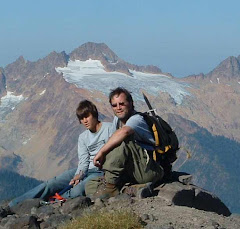
After a hike this afternoon, and thinking about these great artist feeling that they have to give up their creativity for their faith, I came home and pulled up HUG’s (aka Headless Unicorn Guy) story . . . Conversation with a Dying Unicorn. I read it months ago, before I read A Tale of Two Cities and before I obsessed with the French Revolution. I read it again and it made even more sense. Maybe HUG will post it so you can read it for your self. It is beautifully crafted. (sorry about the plagiarism with the photo).

Speaking of writing (and how HUG and I both try this trade, he better than I) I got a brief little e-mail this afternoon that an article, which I had written for an international medical journal, was accepted for publication. It wasn’t a research or academic type of article but a narrative.


So here is the great dichotomy. I have never, ever been able to persuade a publisher or agent even to look at my (book) writing, and I’ve been at this for 20 years. However, this will be the thirtieth (or more) articles I’ve had published in national journals. I’ve never had one rejected in their finality. For example, this article was rejected in its original form for political reasons (meaning that I had given too strong of opinion). So I simply cut out two sentences and mended the hole created in their absence and . . . presto it is accepted. It has always been so easy. I would continue to write articles but it pays about 65 cents per hour (when you include all the drafts and thought). Anyway, that is the great mystery. On one hand I feel like the singer on American Idol whom everyone, but himself, is laughing at . . . but then on the other hand, I fell this encouragement to keep trying when these articles are accepted without question.

I'm So Lucky

I think I felt a bit of inspiration after a glorious walk along our beach. Not ours personally but part of the beautiful state park that surrounds our place. Our beach is really a stretch of about two miles of high cliffs, micro-fjords and an occasional real beach of pebbles or sand laced above with huge old-growth trees and the remains of such vertical on the sand. Besides the mystic fog rolling in between bright beams of sunlight, I saw the migration of a herd of . . . tourists. They come from the big cities and the places far away. I knew they were here, not by the honking overhead or the snorting of their snouts but the huge road jam coming onto our island on Friday evening.

But as I hiked and I watched the strangers snapping photos left and right, smiling, wowing I felt good. I crossed a small meadow near where my trail starts up another forested cliff-edge only to see a flock of camera-laden people motion for me to stop. I was puzzled. Then I noticed that they were watching Jake, or Bud or Rick . . . one of the many bald eagles who live in the park and are always perched in that tree. To the out-of-towners it was a great novelty. They acted like the very spot should be cordoned-off or turned into a spontaneous protected aviary. “But those birds are always there,” I thought. If you couldn’t hike the trail beneath them where they are present, then they would have to close the trail forever. So I hiked on under the tree and their perch. The people signed like I was an anti-nature jerk. “But I live here!” I thought, almost with real words.

Toward the end of the first segment of my trail, after riding the steep walls above the sea like a Coney Island roller coaster I entered a campground. It was a sad scene—people packing the back of their cars with their stuff. I could see the sadness. The kids were walking down to the mystic beach for one more look. “I live here!” Came the thought again. I never have to pack up and go home for I am there. I can walk on this beach every morning, every night seven days a week if I want. I felt really lucky.

More in the Praise of Fiction


I
finished A Tale of Two Cities about three weeks ago and I just wanted to share some thoughts. I was just thinking that my discussion of these books are a little reminiscent of Julie Powell’s narcissistic (and seemingly—on the surface at least—meaningless) exercise of working her way through Julia Child’s 525 recipes in her book Mastering the Art of French Cooking and blogging about it. Except in my case, I’m working my way through the Modern Library’s 100 Best English Novels. Each book that I read has many, if not hundreds, of commentaries written about them. But my observations are personal to what I, Mike, took away. But it is a little melodramatic to make the comparison to Ms. Powell.

I remember being taught a long time ago that any time I studied the Bible or had a morning devotion that I needed to find something profound that would “radically change my life.” With this high standard of success applied to each quiet time, each day, you quickly finding yourself going in circles. Okay, maybe more like spirals. The only question was it an upper or downward spiral.

Sort of in that same spirit, but not so intense, I want to make one observation of how that book impressed me. This is a little different than my devotional exercise because I don’t read the books looking for that life-changing cornerstone, but I read the books for pure pleasure. Then, afterwards, I sit back and look at the natural aftermath of that experience.

Early on I made the observation of that Dickens was one of the most descriptive writers I’ve ever read. I was overwhelmed with awe in his ability to use words to draw me in, into a parallel universe. The plot of the story wasn’t that complicated. It was story about relationships, some on the surface, and some lurking down deep between the lines. Certainly there was a story climax of substitutionary atonement. But beyond those things, and looking at my personal life, there were many strong messages about human nature.

An important message that I took away was the myth of the utopian mirage. This of course was about the French Revolutionaries. They were hurt people. Like one of my favorite bumper stickers says, “Hurt People Hurt People.” I don’t they had much of a choice unless it was total hopelessness and despair. But they devolved this utopian hope of revolution that would bring reason and justice. Maybe Maximmlen Robespierre would visit Paris today he would smile and say, “Yes . . . it was well worth it.” But the brutality, which followed the revolt, was far worse than that from which they rebelled.

Without wasting too much more space on the book I will add my personal observation.

When we see a problem, any problem, we start to formulate solutions. Before long we get emotionally caught up in that illusion . . . thinking if only, if only. But, as they say, you must be careful what you wish for.

I think of church life, especially protestant church life. From the time of the reformation, the church has splintered, splintered and splintered again. As you know, some of that . . . actually most of it . . . did not come as a lovingly disagreement among brothers. The Thirty Years War and other such conflicts were in the same brutal leagues as the French Reign of Terror.

This of course has continued up until the present time and even within my own attitudes. Just this week, the motorcycle church, which meets in our church, had a major disagreement with their parent church and started a new denomination. Our pastor alluded that it was a rough transition. I wasn’t there but (but I have been in the past in other church splits) where each side sees themselves as being the ones on God’s side . . . while the real conflict is usually very personal and has to do with the self-esteem of those involved rather than some edict from God. It’s been the same story throughout history.

But I too am often enticed and seduced by this utopian dream. Once I was sure that I could create the ideal (if not perfect) church and I tried. I worked hard on it and it ended with no less of a disaster (spare the bloodshed) of the early days of the French Revolution. Even now, while I am discontent with the status quo, it can be tempting to think that I could do better myself.

I think it comes back to the fundamental truth expressed by the concept of the speck and log in the eye. Like the French Revolutionaries (maybe thanks to prerevolutionary thinkers/writers Baron de Lahontan and Jean-Jacques Rousseau) people can believe that we are morally better than those at fault. Then, when we are released to express our dreams, we believe that utopia will ensue.

So I have no illusions, most of the time, that I could do things better. My flaws would taint my noble plans.

My next book, which was the only one which I could find in the used book store, is The Way of All Flesh by Samuel Butler. I will save a few preliminary comments for next post.

Saturday, May 29, 2010

Christians and Culture . . . Separate and . . . Unequal


Do you ever have this strange experience where you have moved on in your life over a way of thinking and you have this misconception that all of society has been on the same train as you? Then suddenly you realize that there are plenty of people still at the place you were a long time ago? I don’t mean this in any type of condescending way. Not like my friend Mike C., who was into "Messianic-Christianity" who kept telling me that when I mature to his point, I too will be practicing the Jewish laws. I never got to his point and now I don't see him since he ran off with a young co-worker and left his wife and daughter. But I mean that that I have moved on as a cultural fact.


Okay, I never wore a mullet . . . personally . . . but there was a time in my life when I was around a lot of people who did. As a matter of fact, I had plenty of kin-folks down south who did. But imagine that you assume that all of culture has moved beyond the mullet, then one day you meet someone with the same hair cut as you were use to back in the 80s.

I had another one of those encounters this week. I was up hiking in the N. Cascades and ran into an evangelical pastor, whom I’ve met before. We share some things in common in the fact that we each have sons who are trying to make it in the music industry.

We were discussing how hard it is to be “on the road” as a musician . . . and the temptations a young man can face. My son, Tyler is planning a west coast tour in the coming months and his son had done the same several times.

Then I brought up the movie Crazy Heart. This is not a movie I would have rented simply because I’m not a country music fan. However, a few weeks ago I was strapped to an airplane seat for 6 hours. I had exhausted all my books, videos and writing tasks. Crazy Heart was on the menu of my rented DVD player. I decided to watch it because it had won two Oscars. So I watched it. While I’m not a fan of that genre of music, I thought the acting was good and the scenario was realistic. So, it was worthwhile and has value to watch.

So to my pastor friend, Rob, I said, “I should have Tyler watch Crazy Heart to get a little less glamorous view of the down side of traveling and performing.”

Immediately I could see in Rob’s eyes that I had said something bad. It was the same look that he gave me the last time we talked several months ago (and I know forgot what my social blunder was then). He shook his head and said, “That isn’t the type of movie I would ever watch nor could I recommend to my son.”

So in a millisecond, my memory “DVD” file in my brain replayed the movie (or the 5% I could remember). I felt puzzled. There was no nudity that I can remember. I mean the allow it to be played on a plane. I’m sure there was profanity. Sure there was implied sex and obvious alcoholism. But, from my understanding, both play out in real life in these same situations. I mean, we may not want to acknowledge it but there is a lot of sex going on other there outside of marriage. There are also a heck (pun intended) of people using real "curse words" in their common talk. Also . . . believe it or not . . . a lot of people really do drink too much alcohol.

The look of horror on his face took me back to where I was in the 80s, or 90s. When I was with the Navigators, our area director didn’t believe that we should go to any movies nor watch any TV. We, trainees, did go to Disney movies (or other G rated movies) but our leader didn’t even do that. The reason? Well, according to him, if you paid money to see Thumper, some of that money when to the Disney studio, which then used that money to make movies where people cursed and had implied sex. And some of that money went to sponsor Gay and Lesbian Day, at Disney World. He thought that we should all strive for "moral purity" because the Bible says we should be "perfect as he is perfect." I know. Sad.

It was a huge breath of fresh air when I met the people at Ransom Fellowship (bookmarked at the right). Their ministry is helping Christians to relate to modern culture. I loved going up to the LAbri house in Rochester, MN and watching movies with the Ransom folks. The way they taught me to watch movies was to not be offended by a, so-called, curse word or a flash of a boob, but to see the artistry. I grew to appreciate the hard work and talent of the actors and directors. I also learned, in a much deeper way, to understand the message of the screenplay writers. These were not messages to incorporate into my own philosophy but to discern. I knew when the writers’ own pantheistic ideas were coming through and why. I learned better how to divide between that to be deeply enjoyed and that to not let influence my perspective. It was very liberating.

This brings me to my second experience this week that ties in to this. I read on CNN’s web page yesterday (and I will try to link it to the title of this posting if I can find it) about a special documentary to be aired today about Christians who have completely disengaged from modern culture. I don’t have CNN on my cable so I can’t watch it. But these Christians have chosen to separate themselves completely from their surrounding (and evil) culture. Hasn’t this been tried before, over and over and over . . .in history?

So, between my conversation with Rob and seeing this CNN piece, I am startled, once again, to realize that there are still many Christians who live where I was in the 80s and 90s. They see American culture as the evil empire. All creative products of that society are thrown into the garbage bin of “filft” in their eyes. In my opinion . . . it is a sad thing.

So, I came home and decided to 2-3 “movie nights” at my house this summer. My sons, (who have now moved out) created a decent movie theater in our basement. I want to invite all my Christian (and other) friends and show a very good, but realistic (rather than morally pure) movie and then discuss it. I will see how it goes. I expect that I will once again offend a lot of people and prove to them, as they had thought, that I am a flake.

Thursday, May 27, 2010

More on Certainty and a Faith that can Breathe


I have the habit of recycling old thoughts. However, I was thinking about this issue of certainty again the other day. It happened when I was watching a program titled How the Universe was Made on the Discovery channel.

But I noticed this, almost subliminal, change that came over me during the program. I thought it was intellectual, but really it was more emotional. It had to do with my assurance that God was there . . . or not. It wasn’t linear. I mean, it wasn’t like my faith was gradually shaken by the program with it being more unsecured by the end of the program than at the beginning. It was circular. Certain aspects raised doubts and others gave me great confirmation.

The parts that raised doubts, once analyzed, were not logical challenges with facts but more cultural. What I mean is, every time I sit in a room full of really smart people, and they all scoff at the idea of a God, I feel less secure in my faith. It is the same feeling you get when you go to a dinner party and once there, you realize that you are either over or under dressed (in my case it is always being under-dressed). It is mostly about social coercion.

So when I see these scientists, whom I respect and who seem like really nice people, roll their eyes up at the notion that God was behind all of this, I feel a bit less confident. It is subtle. I’m sure the subtleties though, can add up to a major change in someone’s position if they are not careful. For example, a young person going off to college where every professor and every friend hammers them about their silly belief in the God of Christianity . . . and before long, they simply don’t believe anymore.

But, like I said this is usually circular for me. In just a minute or two a concept will come up that gives me great confidence in God once more. In the case of the program, it was when they got back to the big bang and they tried to convince us that all that is, came spontaneously—from nothing. That can never make any sense. The other part that gives me a net sum increase in my confidence in God being there is the fact that the scientists can not live consistently, on a personal level, with what they are saying (when they say there is no God). But not all of them even accepted the notion of a closed—Godless—system. At least one scientist alluded to her belief in God being behind it all.

I heard Hugh Ross (Christian astrophysicists) say last fall that there are many Christian astrophysicists and more in that field than any other scientific discipline. I even have an in-law who is a pastor on Berkley’s campus and he has several astrophysicists in his congregation (they probably don’t show Ken Hamm videos there either).

But this brings me back to this idea of certainty, which is one of the lines in the sand between being an Evangelical and the rest of Christianity (the same that separates the Islamic fundamentalist from other Moslems). That is certainty in all things. Not just in the big things—God being there and Jesus being his son—but in the trivial idiosyncrasies of life. It is highly esteemed that you doubt nothing in that group.

The very first class I went through as a new Christian was what we call “Assurance of Salvation.” Not only was assurance that the Gospel worked for me, but that God was really there. I remember the guy that led me to the Lord said that doubt (about anything) was like breast milk . . . the very first thing you are weaned from as a new Christian. It was clear, Doubt = Sin.

But now I’ve learned to live with my lack of certainty and have found peace with it. But, like I posted a few weeks ago, I’m not an Olive, confused and twisted . . . going in one direction and then another. But once again it comes back to the issue of honesty about the doubt that I think all humans have . . . although it may be buried deeply in some people.


I remember once flying in a non-pressurized plane in Alaska. So we went from sea level to 15,000 feet fairly quickly. I had my luggage with me and the pilot warned my about keeping the caps loose on my water bottle or other containers because the drop in pressure could blow the tops off. He had seen cans of pop explode inside someone’s suitcase.

This started me thinking about healthy faith and how it needs to breathe. It is alive because it is attached to our emotions and our intellect, both which are alive and dynamic. But as an Evangelical I was taught the opposite. That it was very important that I knew the answer to every question, the exact interpretation of every Bible verse, and a fixed doctrinal architecture. Such assurance, conviction and certainty are the marks of a mature Christian . . . so I believed.

So, we teach or little evangelicalites in Awana and other program to memorize and never, ever doubt anything. Right now I’m visualizing the kid preacher in Jesus Camp. So the corner on absolute truth is held only by, not only Christianity, but it is furthered defined as Protestantism and further defined as Evangelicalism and then is further defined as my denomination and is even further defined by the particular views of my local church. Absolute truth is defined so precisely that we become more and more isolated from the rest of the world.

We were also taught to put our faith in this stone box of certainty and sealed. I know that I could never even entertain (except way down deep in most private place) that any of these “truths” not being so. That faith couldn’t breathe. It couldn’t consider other points of view . . . because to do so would be an abomination of the worst kind.

If you stood at the podium at our church or any Evangelical church and said, “I want to see a show of hands of those who still have doubts about God or our church doctrine?” I would be surprised if a single hand (but my own) would go up . . . especially if the speaker said it with great passion. Then the typical pastor would shout, “God said it, I believe it . . . and that settles it!” Does it really? Oh, I can think of a thousand unsettled questions. The first obvious one is “. . . hmm . . . and how do you know what God said?”


This question of knowing has not been limited to Evangelicals. I have a great respect for philosophers (as a genre of professions). However, often they behave like kindergarteners. Throughout history they practice the same cycle over and over. In the philosophers’ study of knowing and doubt (under the heading of epistemology) they have a bipolar swing. They observe one truth about reality. Then they ride that truth to absurdity . . . like a broken down horse racing east to its demise in the Sahara. Then they come back to the opposite view and ride it to its demise in the west.

There were the rationalists, who believed that reason alone could take you to absolute truth every time. Then the Empiricist took that further. They believed that if our senses couldn’t perceive it, then it wasn’t true. Even a kindergartener would know better.

Early childhood educators and psychologists have shown that babies do have an “out of sight, out of mind” view of the world in the beginning (a pure empiricist’s view). Put a shinny ball under a box and they don’t look for it. But, I think it is around age 12 to 16 months, they do start to look for it. So they know if it is not in their senses now, doesn’t mean it doesn’t exist. If the tree falls in the forest it, indeed, makes a sound.

When the two above views came to an impasse they moved into the extreme other direction. Starting with the existentialist view of epistemology, that it takes more than senses to know truth, to the absurdity of the post-modern, where there becomes a total lost of hope for truth. The bipolar part is where they think, “well if I can’t reach 100% certainty 100% of the time using my reason alone, or my senses and reason then flush the whole concept of truth down the john.”

I digress again.

Coming back to the Evangelicals and the emphasis on certainty sealed in an airtight stone box. If it can’t breath, then (like what happened to me a long time ago) with it experiences a rapid decompression, the top is blown entirely off. How many post-Evangelical zombies are they out there . . . those who have lost all hope of knowing anything anymore? I often wonder what happened to the kid preacher from Jesus Camp after his hero, Ted Haggard was caught? That must have caused a rapid decompression of his young world.

How many zombies still stand in the church, not allowing themselves to even consider another point of view? That’s why it is so hard for me to talk to them. I feel that my faith now breathes (I got to this point the hard way). If someone tells me that a homosexual can be a good Christian, I don’t have a gut reaction based on a hard core certainty . . . but I feel open to discuss it and to hear other perspectives. In my previous world this type of openness was always considered a serious fault.

So I end this mental wondering with a praise of doubt . . . good, healthy doubt.

Sunday, May 23, 2010

Facebook, Twitter and the Meaning of Life


I was pondering why I was feeling discouraged about my relationship with Evangelicalism . . . once again. I think it was multifactorial, however, one key one was my latest rejection by a literally agent for my manuscript Butterflies in the Belfry, Serpents in the Cellar. This will be sixth rejection and was probably my last try. I think the book has come to its demise.

The first five agents appeared secular in their orientation. I had carefully screened them as appearing to be interested in my type of work . . . but apparently they were not.

If you don’t know how this works (and I think most here do) you really can’t get a book published these days unless you have an agent. To get an agent, you have to win them over with a two-paragraph pitch. So, years of hard work and thought come down to about six to eight carefully worded sentences.

The previous rejections came quickly (within a week) and were obviously “form” e-mails . . . but polite. “Thank you so much for considering our agency. We are sorry but we are not accepting manuscripts of your type right now.”

Then I decided to try a self-proclaimed Christian agent. But he wasn’t over the top with a fundamentalist view of the universe. He had actually represented some controversial topics and had been a writer at Christianity Today. But his rejection came late (after a month) and with a twist of cruelty I had not seen before. “There is no way I would want to represent you.” So what the hell does that mean? It really leaves you wondering.

I’ve said before, and I think most writers (dare I call myself one) and artists in general would much rather have someone look carefully at their work and give strong, specific criticism than to have someone scowl and run away by the very mention of it. It leaves us confused and dangling.

Okay, putting that aside, I was thinking about a much broader topic . . . very broad . . . and that is the proverbial meaning to life.

I’ve said before that I think you can boil down all human behavior to two general areas. First of course are biological needs. Those are clear but can be complicated. I say complicated because in history I’m sure wars have started over simple biological needs . . . often a King in one country wanting to have sex with someone . . . whom he can only win via war. But of course food (or lack of) can drive a nation to war or even water. That was just one small part of the French Revolution (which I’ve been thinking about recently).

But the other major player is simply our deep desire to have value. That is the prime mover in virtually all that we do. This is why there are city block after city block of lines of people waiting in queue for one chance in a million (literally) of being America’s Idol. Getting on TV is sufficient for some, even if it makes them look like a fool. But this is why we have Facebook and Twitter too. Facebook has been in the news of late (including the cover of the last Time magazine) because of privacy issues so I was thinking about it more than usual.

I was not familiar with Facebook until December 09, when I joined to see photos of my first grand child, Oliver. But immediately I had all these friends tying into my network of people. I hardly go to Facebook except—still—to see photos of my grand son. But I was surprised how so many people are posting, almost on the hour. “I ate a PB and J sandwich and it was so good.”

Now, before I say too much, I will be the first to admit that this very blog is not more than a mouse’s eyebrow removed from that same narcissistic exercise. So, like always, I include myself in my commentary. But I’m still not saying this is a bad thing. While most of what we do is based on that primal desire to have value, this does not mean we should stop doing it. However, we should know why we do these things and we should know that they never accomplish their purpose . . . making us feel of significance.

I’ve mentioned before that more than 90% of the motivation of doing humanitarian work comes from this same place. I’ve been there several times. I’ve seen American doctors being very rude to the nationals that they have come to help and they would put a patient in jeopardy in order to get a better photo for their humanitarian trophies. I have my photographic trophies on my office wall as well. I don’t think I would put a patient in jeopardy to get a good shot . . . at least I hope not. And I was just using that as an example of the extreme to make a point. But with all that said, we still SHOULD do humanitarian work. We still should go to Facebook and Twitter as well if we want . . . or blog.

Besides knowing why we do what we do (and getting away from the Christian concept of “I am doing this out of pure motives”), we should also strive to know that we have tremendous value (that is intrinsic value) because God made us. The Gospel is all about value being added by an act of grace. So we don’t have to be America’s idol, a great humanitarian, great mother, great father or great writer to have value.

But I use the word “strive” because I fail at this all the time. I think us who have the anxiety tendency tend to fail at this the most . . . but I’m not sure.

But posting on Facebook is part of this endless march to find meaning and significance. Someone cares if I ate a PB and J. Someone cares if I have a thought on Christian Monist Vs Dualism. It’s all the same.

I know that I am off on a convoluted path but there is a point. I find myself in a funk, as I talked about yesterday, seemingly distant from the church (small “c”) and I even entertain, at times, of going back in—full throttle—and faking it like everyone else does. It is because I desire this significance and I have a (wrong) feeling that I could get it there.

I think that it was three years ago when I started putting my thoughts down in the Butterflies manuscript. I poured my heart into it for well over a year. It was a labor of love. I had those thoughts inside my head, like a steamship slowly coming into vision out of the midst of a dense fog. As I wrote the words down, the fog seemed to lift.

My wife Denise tells me that I should only write for myself. I think that is why she doesn’t like me writing this blog where I hang my dirty laundry out for the world to see and she doesn’t come here. I think that she may be right. Maybe, if there was a purpose in my writing it is for my own benefit.

But in the same way I thought I would go to the mission field an be this great missionary guy that someone would write books about some day (like Hudson Taylor), I may have had a grandiose idea that I could make an impact somewhere by my writing. And by having such an impact, I would be a bit more valuable.

This is where I cross paths once more with the brilliance of Solomon. When I read his writings—Ecclesiastes being my favorite—I feel that I truly am sitting at the feet of an intellectual giant. He is also a genius who I think is very misunderstood because his writings make us uncomfortable.

“All is vanity, a chasing after the wind. So what is left but to eat, drink and be merry.” How many times have I heard preachers tell us that those words came from an unrepentant Solomon? They will add that later he “shaped-up” met the Lord for real, and then realized that eating, drinking and being merry were wrong and that having a great ministry is of great worth. Not!

I think if Solomon was here he would say, “I tried out for American Idol . . . and I won. I got a platinum record . . . but still I felt of no more value. Then I devoted my life to Christ, became a missionary in China, built a chain of Christian schools across Asia, wrote three hundred best-selling books . . . yet, for nothing. I went to church every morning for fifty years, never missing a day, yet all vain . . . chasing after the wind. I started the largest ministry in the US and was the pride of James Dobson . . . yet it was all worthless. Then, I realized that I was fully valuable in God’s eyes already and these other things didn’t matter. Then I knew that sitting in Starbucks with my son, eating a cinnamon roll, drinking a mocha and being merry of heart in the bright sun . . . is as good as it gets. Know if I could only believe that once and for all.

Saturday, May 22, 2010

The Wilderness Deeper In


I remember clearly the day I “met” Michael Spencer. It must have been at least four years ago. I was messing around with my own attempts at blogging. I had tried to create an anonymous post-evangelical place where people (including myself) could discuss thing down on the ground floor . . . with complete candor. I was new at this and my first mistake was not setting my privacy correctly. So I made several heart wrenching confessions. Then one day I was horrified when I did a Google search of my name and the content of my blog was the first thing that came up. (I think the reason I was Goggling my name was to see if any was still reading a book I had written 10 years ago).

Anyway, I took that blog down. But the name of if was something along the lines of Alone in the Evangelical Wilderness. So it didn’t take long before I accidently stumbled upon Mike’s blog with a very similar name. At the time I didn’t realize that he had quite a following and he was more major league than my humble attempts. But he was kind enough to privately correspond with me for a while.

The first thing I said to Mike was how he and I seemed to be on the same page, and that page is this overwhelming feeling of being in a wilderness.

For reasons that aren’t clear, that wilderness has never seemed as dark and daunting as it has of late and I’m speaking just of my personal perspective. You know how it is sometimes. You get in a funk and you don’t know why. In my Nav days I’m confident that my old friend Gary would tell me that the funk was demonic oppression.

I have simpler explanations. Sometimes it can be biochemical, you know things like seasonal affective disorder or (mostly for women) hormonal shifts. But most likely, in my case at least, it is subtle life events, sometimes on a subconscious level.

I’ll get back to that but first I want explain this wilderness.

I had spent 35 years deeply involved in Evangelicalism. I became a Christian through a Navigator ministry when I was just 17 and immediately got involved with them. I became a lay-youth pastor when I was 18. I was involved with the Navs all the way through college and then I went to a Navigator staff training center for another 5 years. Then I moved to Michigan, got married and started a Navigator ministry for four years before becoming a Navigator missionary in the Arab-Moslem world for another 3 years.

During that whole time I was also very involved with the local churches I attended. I was a Sunday school teacher many times, Sunday school director, small groups director, missions director, etc. etc. etc.

Although I suffered a severe disillusionment on the mission field and returned home a competently broken (and abandoned by my old Christian colleagues) man. But I was still very involved with the Evangelical church for the subsequent 15 year.

But gradually, and mostly over the past 10 years, I found my self in the middle of a masquerade ball, brightly lighten with scores of people in their gowns and masks swirling and dancing to the soft Baroque (but godly) music being played on a harpsichord. I knew all the moves, the flat steps and the toe steps, the spins and the bows.

But it was like far back in the darken corner of the ballroom was a door, an alluring door. Then once I looked up and the door briefly opened and closed. I get a glimpse of another world . . . green . . . and with trees. I keep thinking about that door as I dance in my bright, white suit and holding my mask firm to my face.

Then someone leaves the door open and my eyes become fixed on it. The wilderness draws me like it did to three kids with wanderlust and a backless wardrobe.

So eventually I start stepping out the door . . . each visit becoming longer and longer. It is much warmer inside, but something about the fresh air that makes up for the chill. I notice the weight of the gown and the mask that has such tiny eye holes that you can’t see much of the world.

Eventually I find myself completely outside looking back in . . . to the smiling (via the fixed, china faces) and dancing and bright lights.

It was about three years ago when I stepped down from being a church elder. It was a year ago when I stopped going to Sunday school.

But now I feel completely lost between the trees. I can still see the brightly lit doorway and the figures. I can still hear the laughter and the mechanical plucking of the stings.

I’ve tried to step back into that ball room, while keeping one foot outside and holding my mask loosely.

I signed up to be on the board of an Evangelical youth organization three years ago. But that was difficult. I found myself isolated between loose talk of common miracles. “God sent a bright sun beam and it touched the kid on the foot right as I was talking to him. I told Him that was God making the point that He is real and wants Him. The boy started crying and said he wanted to know God.”

The whole board (including my dear wife—who loves these stories) was mesmerized, donning big glowing smiles. Then old negative Mike, with a little fake smile, says, “But if the kid bases his belief in God on a sunbeam . . . what’s going to happen later on when his dad gets cancer? Will his faith crumble?”

Was it Frank Sinatra who said, “Then you have to go and spoil it all by saying something stupid like . . . I love you?”

So I step back out into the wilderness to get a breath of fresh air and go back in and try again.

Next something really squirrely happens in the youth organization . . . almost criminal and it was done by someone on the board. I wasn’t sure who did it. It gave the organization a real black eye. There was a real effort to put it under the carpet and pretend that it never happened, that we are all saints and none of us did mischief, but this big mess was either be God doing something or the devil. I kept saying that we can’t let this go without figuring out who did this.

I had to go back outside. I could tell I wasn’t liked. I not only didn’t see God working (in a very personal way) in rainbows but I was trying to imply that we, godly board members, were not pure to the core. Hmmm. I was speaking from personal experience. I know I am capable of anything and scripture seems to support that. I believe that we are all deeply, morally, psychologically fallen (or flawed) and we do do bad things still.

So I go back outside and walk among the trees. This time I venture even further from that glowing doorway.


I had a span in my life (back in college) of about two years when I did solo backpacking. It was mostly out of convenience as I had no backpacking friends at the time. It was interesting at first. But then it got old. I remember waking up on top of Roan Mountain, in North Carolina, and seeing the most surreal sunrise. I was actually above the low clouds and the sun rays were coming up in laser beam red streaks. But I was watching it alone and, as incredible it was, I knew that I could never explain it to anyone (even here) so the experience alone was deeply diminished. I got tired of being in the wilderness alone.

This wilderness is very lonely and that’s what I grabbed on to Michael Spencer when I first found him. By that time, I could hardly see the church . . . woops . . . I mean the ballroom door anymore.


Down south, deep in the Bible belt where I am from, we were mostly emotional ignorant by choice. We had no clue why or how we felt about anything and we never tried to put feelings into words. But this cycling in and out that back door of the church was a common practice. But, due to the lack of insight, it was believed that God was in the ballroom and if you didn’t dance like a mad fool, you didn’t love Him.

So people often get fed up with the dance go out the door. But then they are overwhelmed by guilt. The guilt gets then one way or the other. Ether they say, “Yeah, I am a back-sliding heathen, and give up all pretence of being a Christian and start making meth, or they come back to church and throw themselves face down in front of the alter and bawl like a baby. While they are crying the church, woops, I mean ballroom people start to re-dress then in their costumes. There is nothing in between.


Dateline mystery last had a great commentary on this culture. Featured were two deeply committed Baptist lay-ministers and their families who, beneath the surface were having affairs and one murdered the other. But on the surface, and the videos they showed, them preaching in church, had no signs of the deep trouble beneath the masks.


There are days when I look at that door way (by the way, I do go to the general church service each Sunday, but not involved with anything else) and I am seriously tempted to go back through, to cast myself down and bawl. I want to say, “Forgive me for I have been in deep sin. I’ve been negative. I’ve stopped smiling all the time and I know that was wrong. Forgive me and I want to come back. I want to pretend that we are all saints that none of us have alternative motives for the things we manipulate each other into doing. That person A is not flirting with person B or to not notice that program C, D and E is about someone’s ego and has nothing to do with “Jesus” as advertised. I’m sorry that I believed the scientist with their silly little PhDs and they has mistaken a pig for Lucy and Mount Saint Helens proved the earth is only 6,000 years old. I confess I’ve been a fool and have been brainwashed by the humanist, liberal intellectuals. I confess that I don’t believe that God is constantly working outside the laws of physics just for me and that devils are constantly trying to frustrate me with flat tires and bad colds. Please take me back in. I will never go against the herd again . . . never. I will re-join the Republican party (or the Tea Party). I just need the warmth and the lights."

I will digress more tomorrow. I must go do chores.